Soft wash or power wash: which is right for your roof, walls and drive
Soft wash roof cleaning and dash cleaning use a detergent and low pressure. Power washing uses the force of the water. The surface decides which one James uses: a roof or a dashed wall is soft washed, and a tarmac drive, a concrete yard or a patio is power washed. He does both, across Galway, Westmeath and Offaly.
100% recommended on Facebook- Fully insured, with over 20 years' experience
- Owner James McCarthy on every job
- Free, no-obligation quotation at your property
The short answer
Pressure cleans a hard surface. On a soft or jointed surface it does damage, and the growth comes back anyway because the spores are still there. A soft wash kills the growth with a detergent and lets it lift off at low pressure, so it suits anything a lance would mark.
- Roof tiles and slates: soft wash, after the moss is scraped off by hand
- Dash and render walls: soft wash only, so no chipping is lost
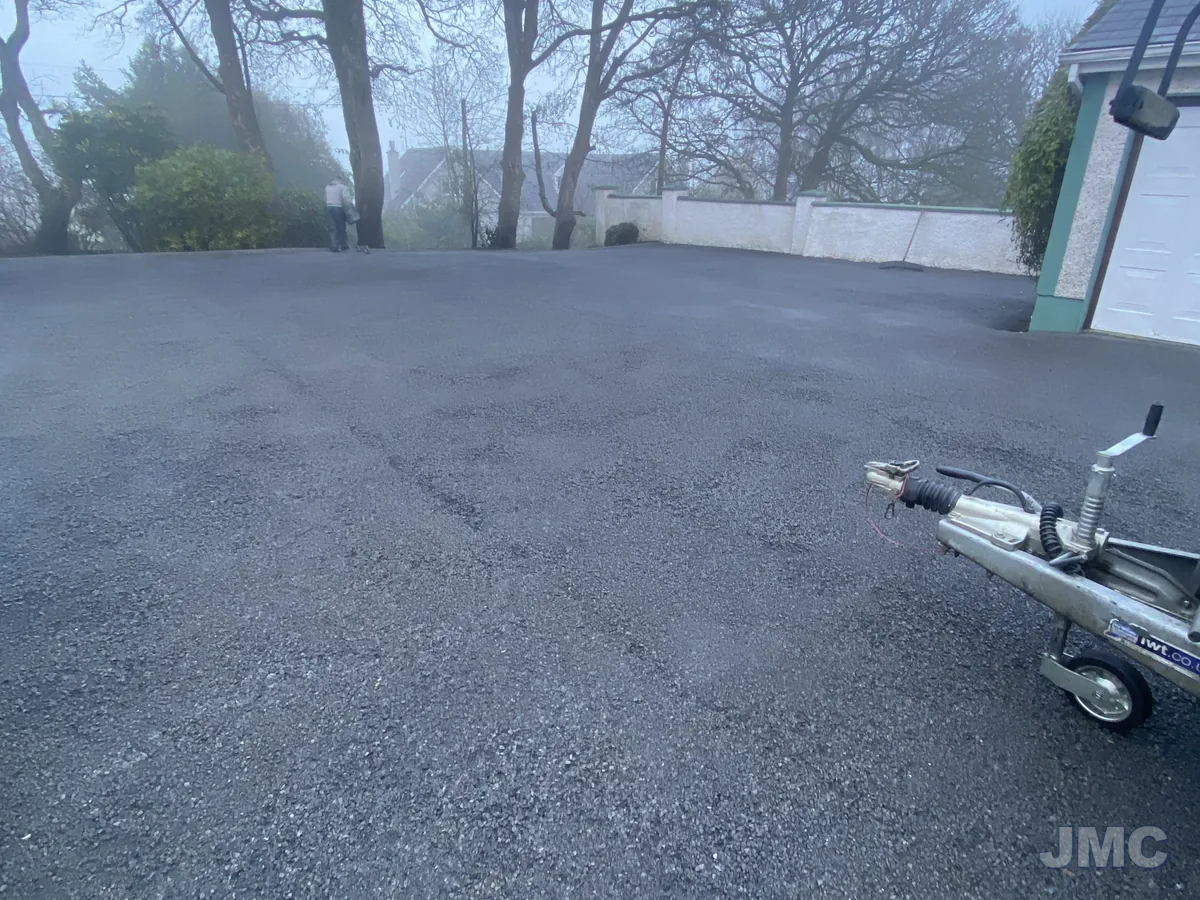
- Tarmac, concrete and block paving: power wash, with the joints treated afterwards
- Patios and natural stone: power wash, at a pressure set for the stone
- Fascia, soffit and uPVC: a detergent made for plastic and a gentle rinse
Moss on the roof? See soft wash roof cleaning.
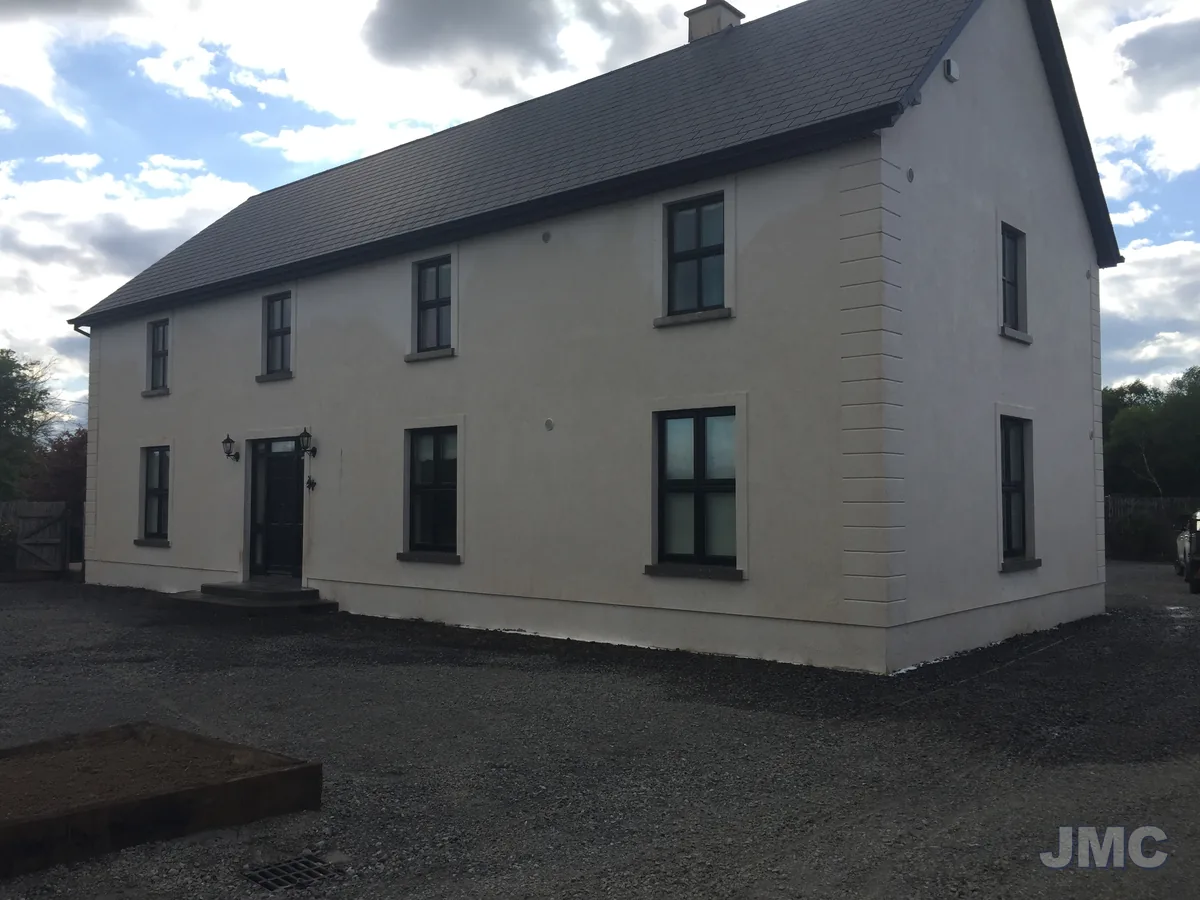
How a soft wash is done
Scrape first, on a roof
Heavy moss comes off by hand before anything is sprayed. Spraying moss that is still sitting on the tile spreads it, and the scrapings would block the gutters later, so they are cleared as part of the job.
Detergent at low pressure
The detergent for the surface goes on at low pressure and is left to work: a biocide on a roof, which kills the moss, algae and lichen left in the joints, and a specialist detergent on dash and render that lifts the fungus and the red algae.
A gentle rinse, or none
Walls are rinsed gently and the chipping stays where it is. A roof gets a low-pressure wash and the gutters are cleared. Some treatments are left on the surface so they keep working.
Where power washing is the right tool
Tarmac, concrete, block paving and stone are laid to take weight and weather, and the dirt on them is ground in. That is a job for pressure, matched to the surface.
- A long tarmac drive gone green from the edges inwards
- Block paving with moss and weeds in the joints, cleaned out and re-sanded
- A concrete yard, the apron in front of a shed, or a car park
- A patio gone slippery, with the pressure turned down for softer stone
Even here the wash is half the job. Algae and fungus that are washed off and not treated come back, often worse, so the surface is treated with the right detergent after the wash and the regrowth is slower.
Surface by surface
The same house usually needs both. James prices the whole job at the house: the roof and the dash soft washed, the drive power washed, in one visit.
One soft washed, one power washed
A slate roof and a tarmac drive, two of James's own jobs. Drag the slider to compare.
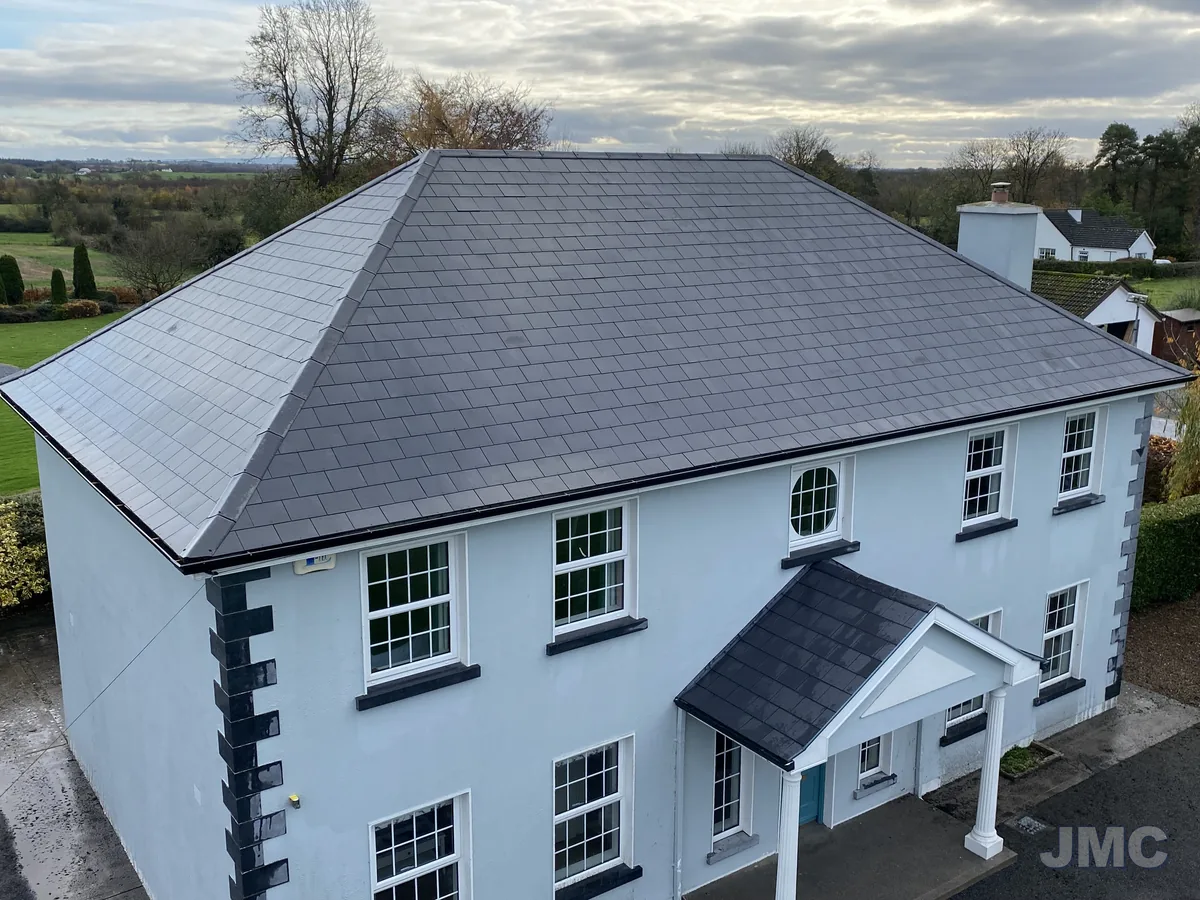 After
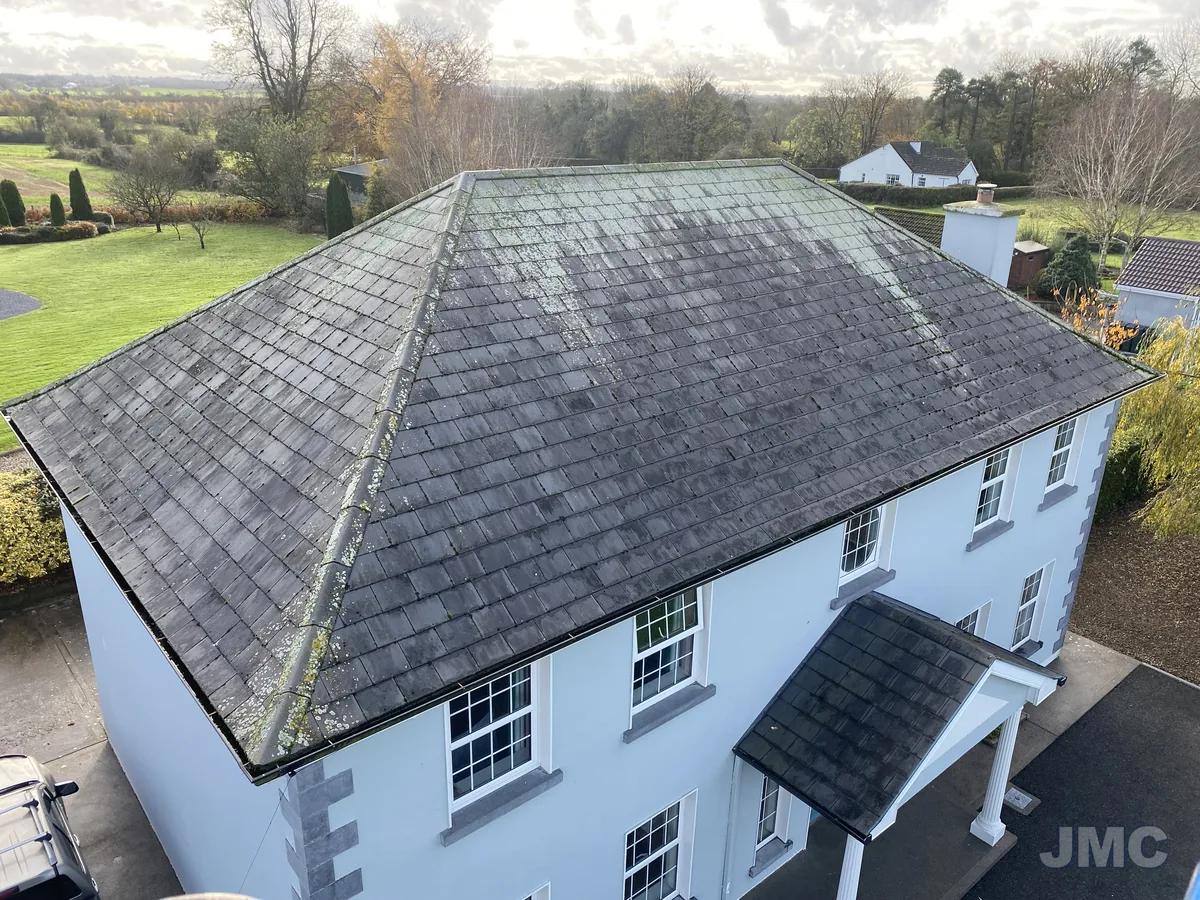 BeforeAfter
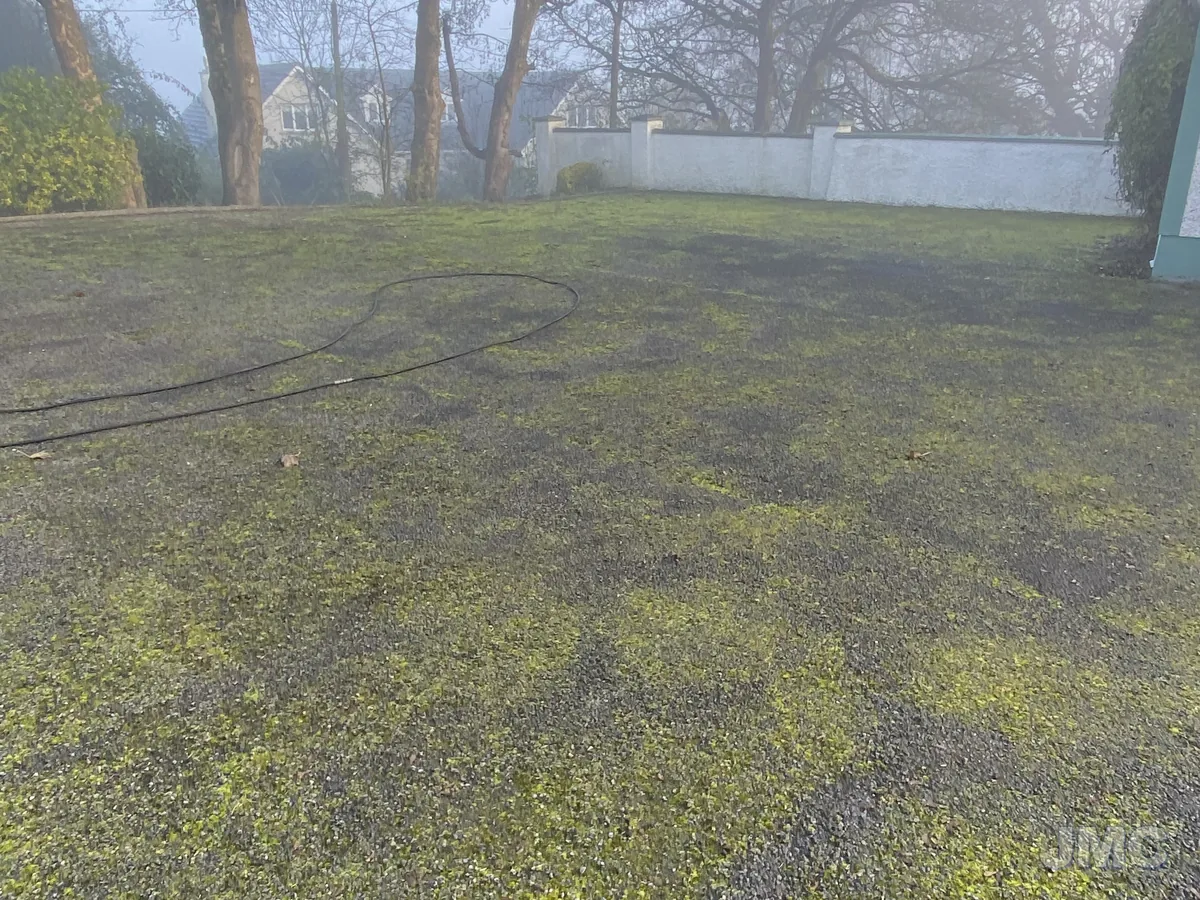 Before
Not sure which your house needs?
Send a photograph of the roof, the wall or the drive to 087 920 9411. James will tell you which method it needs and give you a free quotation at the house.
Can a roof be power washed instead of soft washed?
Not safely. High pressure breaks the edge of a slate, strips the surface from a tile and drives water in under it. James scrapes the moss off, treats the roof with biocide and washes it at low pressure, on every roof type.
Is soft washing a power wash at lower pressure?
No. The detergent does the work and the water only carries it on and rinses it off. A power wash with the pressure turned down and no treatment leaves the spores on the surface, and the growth returns.
Will a soft wash lose the chipping from a dashed wall?
No. That is the reason dash is soft washed and never pressure washed. The detergent is applied at low pressure, left to work and rinsed gently, and the marble chipping or Therling dash stays in place.
How long does a soft wash last?
It depends on the surface, the trees around it and the side of the house it is on: the damp side goes red or green first. Treated growth takes longer to return than growth that was only washed off, and James will give you a realistic expectation for your house.