The Short Answer
Tarmac moss removal comes down to timing and treatment. Moss sits in the damp, shaded parts of a drive: along the edges, under trees and wherever water lies. Dry moss comes away far more easily than wet moss. Unless what is left in the surface is treated, it grows back from the same spots.
- Pick a dry spell, with a dry day or two to follow
- Scrape and brush off the thick growth with a stiff yard brush
- Apply a moss killer that says it is safe for tarmac
- Leave it for the time on the label, then brush and rinse
- Clear the edges and the leaves, so it has less to grow on
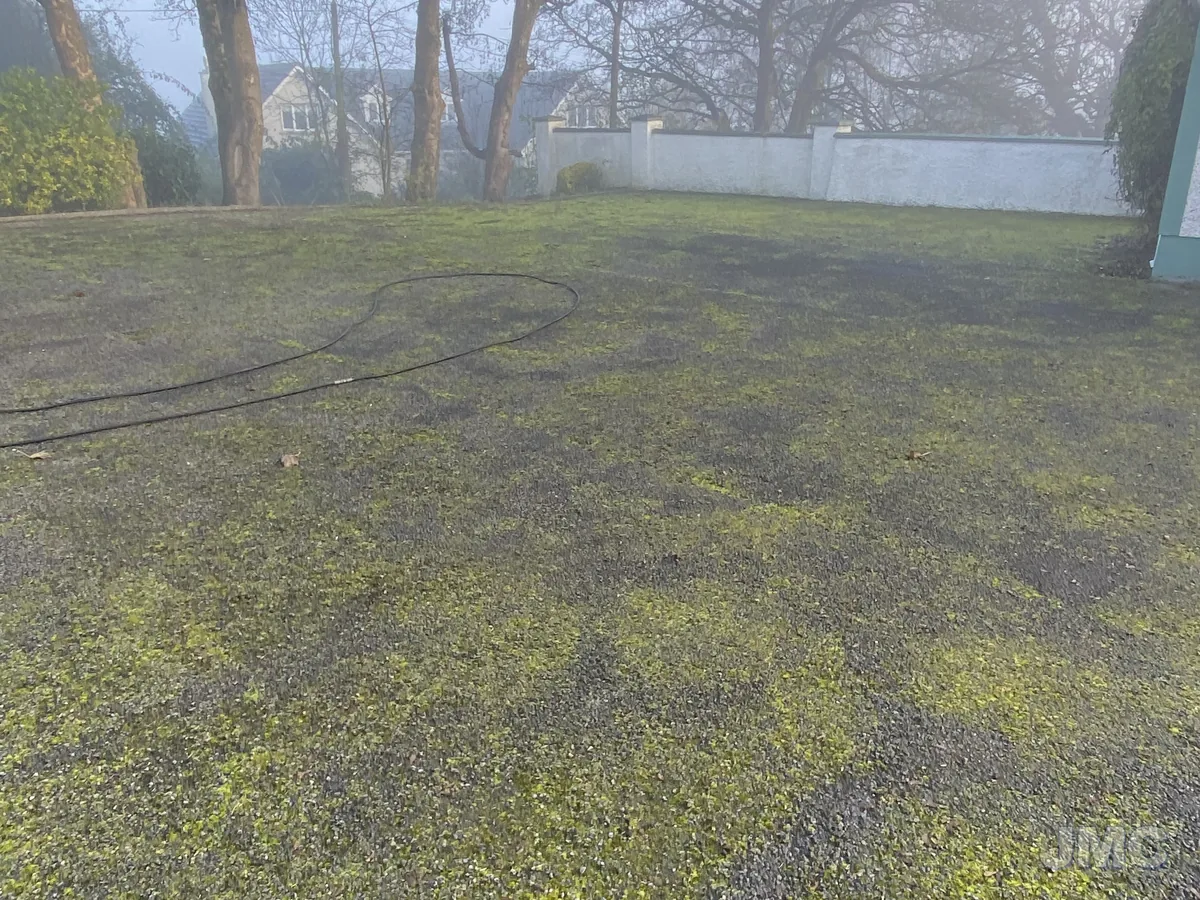
Doing It Yourself, Step By Step
Clear It Dry
Sweep off the leaves first, then work along the edges and the green patches with a stiff brush or a scraper. Bag what comes up, so it does not end up back on the drive or in a drain.
Treat What Is Left
Use a product labelled for tarmac and follow the label. Keep it off the grass and away from drains. Household bleach is a poor choice: it harms plants and runs off with the first rain. Some lawn moss killers contain iron sulphate, which can stain.
Rinse And Keep It Clear
Brush again once the treatment has worked and rinse with a garden hose. Then keep the edges swept, as moss starts where soil and leaves gather.
Where A Pressure Washer Goes Wrong
Pressure washing is the fast way, and it is also how a good drive gets damaged. Tarmac is stone held together with bitumen. Too much pressure, or a lance held too close, can pull the fine stone out and leave lines you will see for years.
- Sound tarmac can be washed, at the right pressure for the surface
- Loose, cracked or broken tarmac is a repair matter: washing makes it worse
- Keep the lance moving and work to one side, never in one spot
- Washing removes the moss but not the spores, so it still needs treating
James has over 20 years' experience and sets the pressure for the surface. The edges are cleaned as well as the centre, and any algae or fungus is treated with the appropriate detergent afterwards.
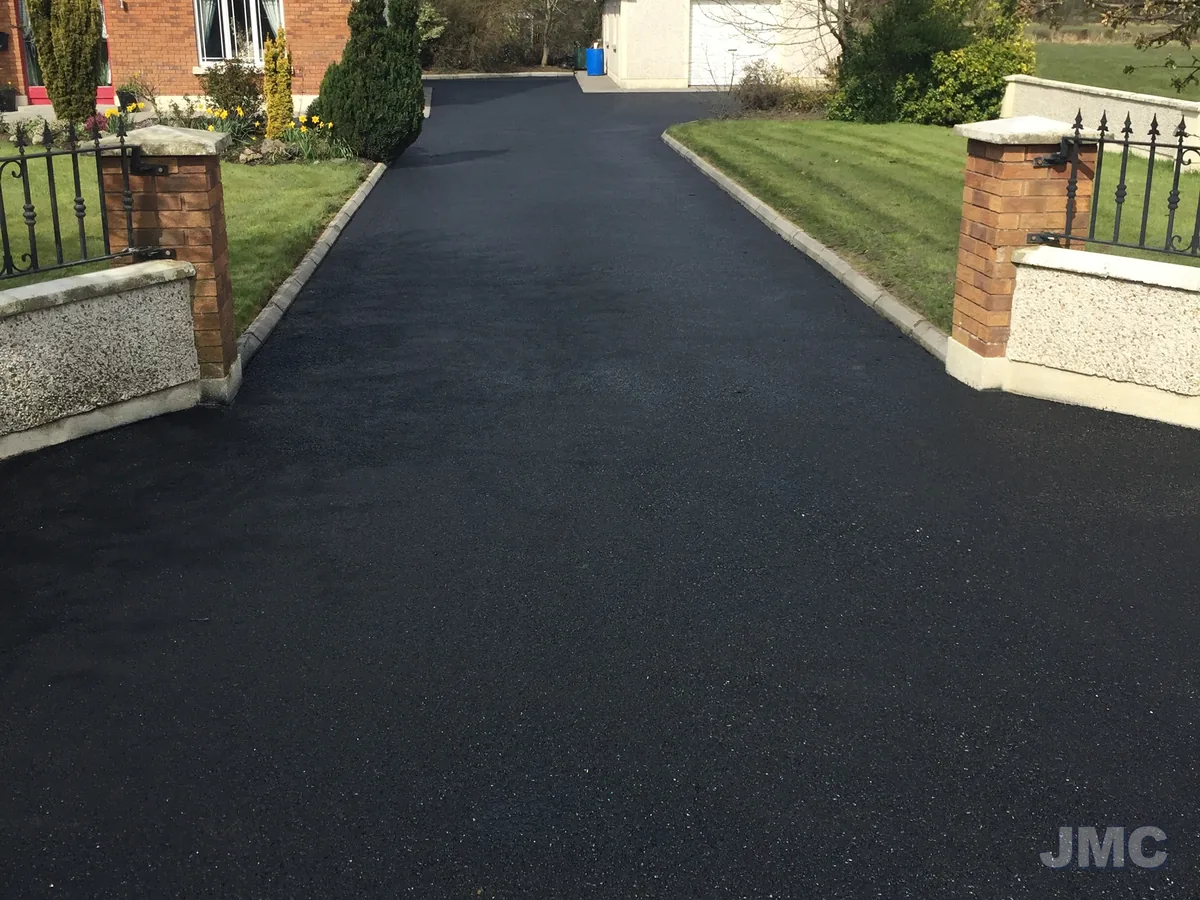
If You Would Rather Have It Done
James visits, looks at the surface and the growth on it, and gives you a price. The visit and the quotation are free.
- Driveways & tarmac: Tarmac, block paving and concrete washed, with the joints and edges cleaned and the surface treated.
- Driveway & roof sealing: Sealing after a clean, on request. A sealed drive sheds water and gives moss less to grip.
- Patios & paving: Paths and patios washed in the same way, at a pressure set for the stone.
Tarmac Drives James Has Washed
Before and after, photographed on James's own phone.
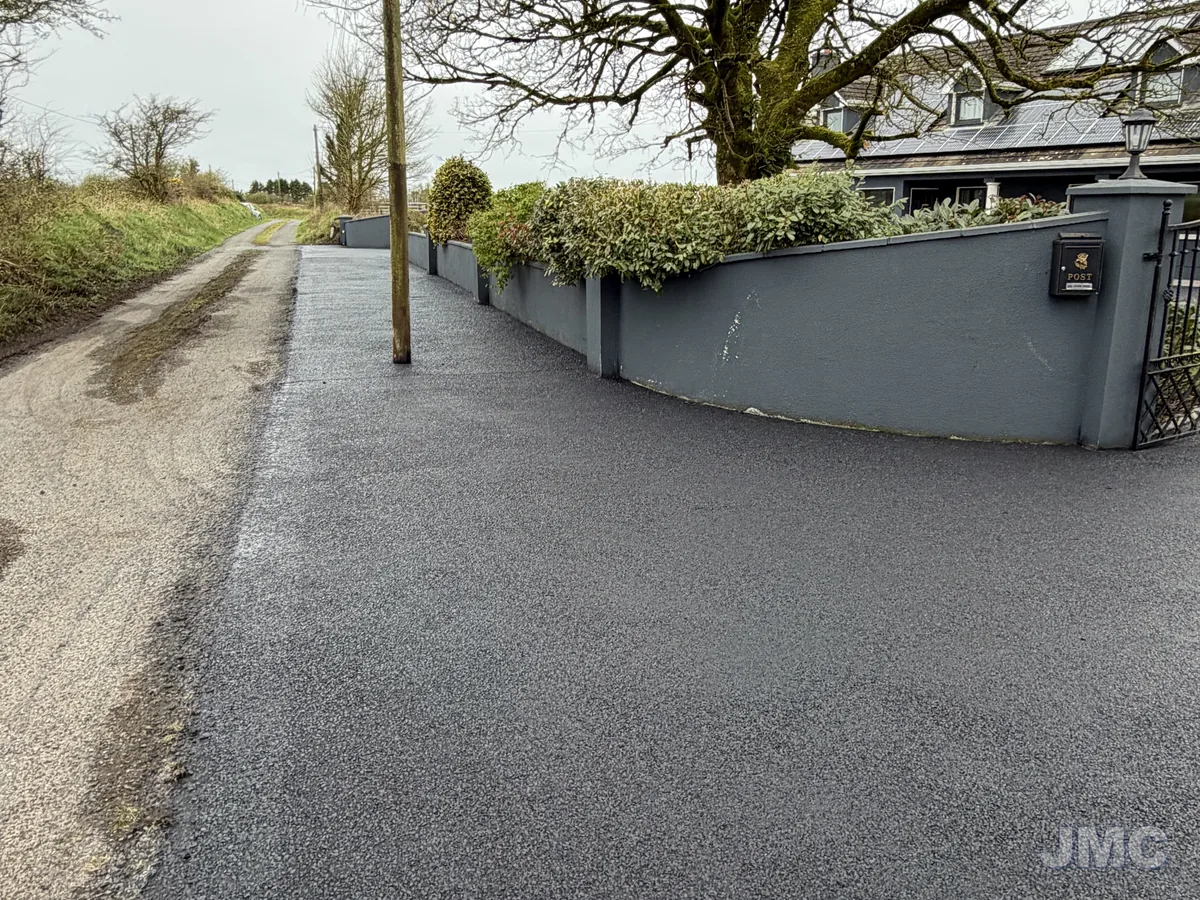 After
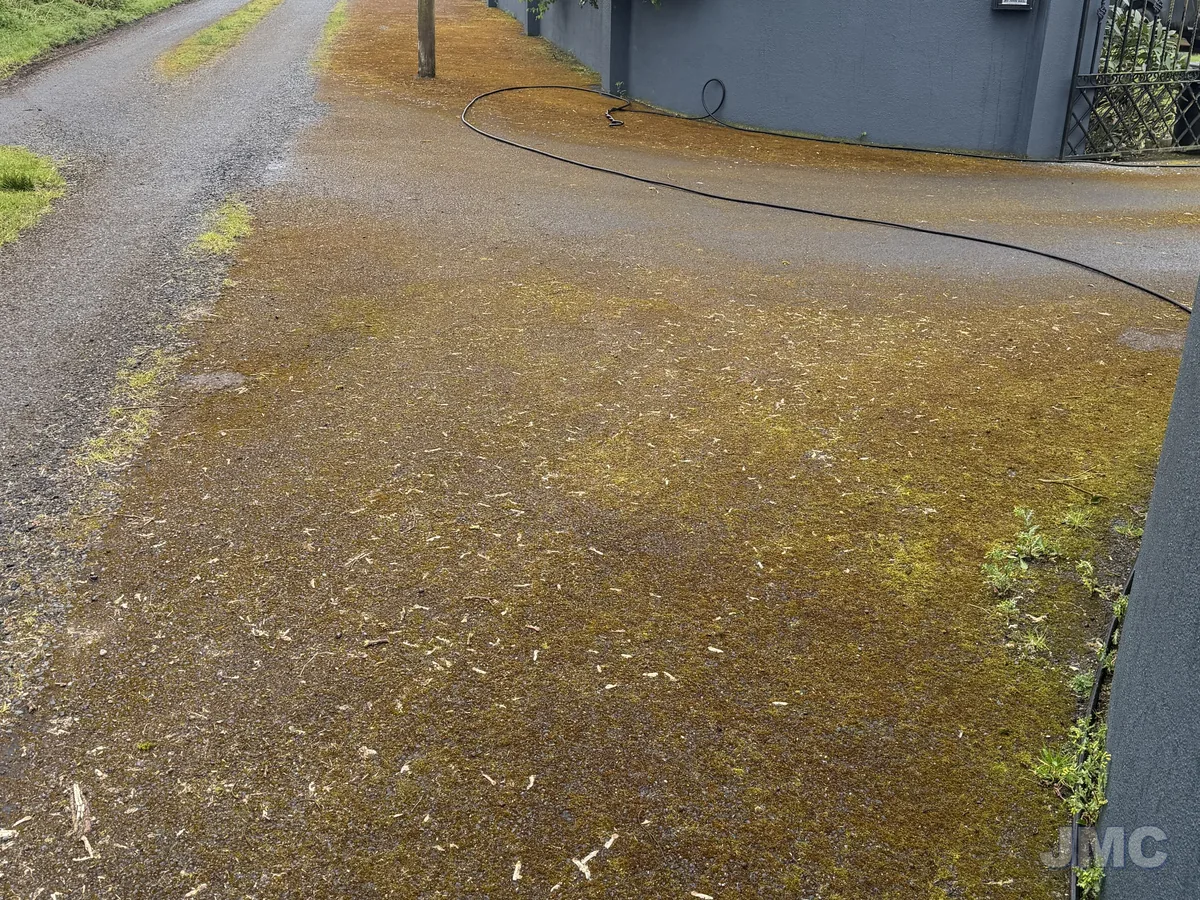 Before
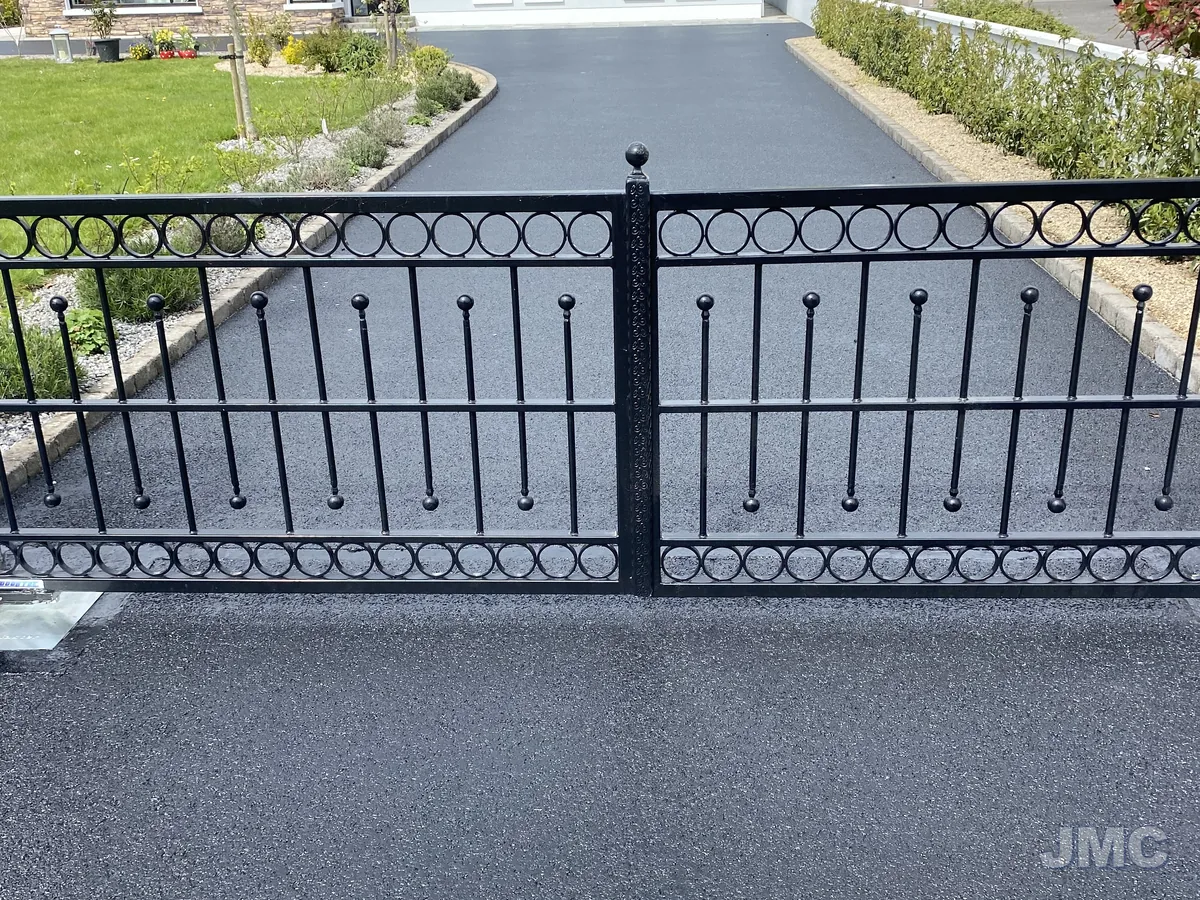 After
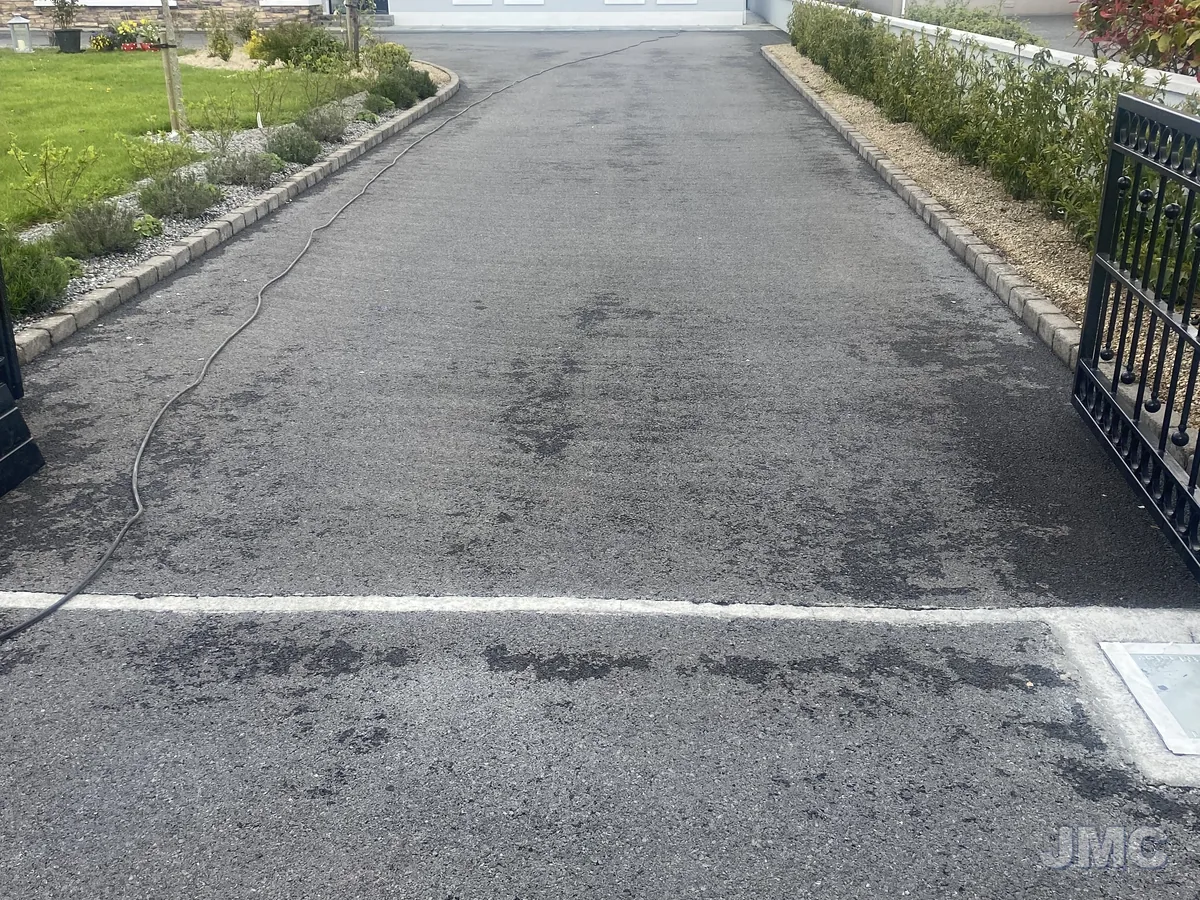 Before
Common Questions About Moss On Tarmac
Will pressure washing damage my tarmac?
Not when it is done at the correct pressure on sound tarmac. Too much pressure, or a lance held too close, can strip the surface. Loose or broken tarmac is a repair matter, and it should not be washed until that is dealt with.
Can I use bleach on moss on tarmac?
It is best avoided. It can harm the grass and plants beside the drive and it runs into drains. A moss killer labelled for tarmac is the safer choice, used as the label says.
Why does the moss keep coming back?
Shade and damp. Under trees, on the north side of a house or where water lies, moss returns faster. Trimming back trees, keeping the edges clear and treating the surface all slow it down, and sealing can help.
When is the best time to do it?
Any dry spell. Moss comes away more easily when it is dry, and a treatment needs dry weather after it goes on, so avoid a day with rain on the way.
A Green Drive You Would Rather Not Tackle?
Send a photograph of the drive to 087 920 9411 with the rough length. James will visit, look at it and give you a free quotation.